Lightbulb Buying Guide: What to Look For in a Lightbulb

What to Look For in a Lightbulb

Although there are other options, including LEDs and halogen bulbs, when it comes to cost, availability, and savings, compact fluorescent bulbs (CFLs) still offer the best value for lighting. You can now find LEDs for around $20, while CFLs average from $2-$10.

*

Lumen output: To maximize energy savings, choose the product that provides the most lumens at the lowest wattage. Energy Star lists common lumen equivalencies for CFL and incandescent wattages.
*

Shape:

Triple-tube bulbs provide high light output in small spaces, ideal for desk and reading lamps.

Flood lamp CFLs work well for recessed and track lighting.

Globe shapes work well in bathrooms and above vanity mirrors where aesthetics are important.

Torpedo-shaped candelabra bulbs fit nicely in small light fixtures such as sconces and designer lamps.

Dome-shaped CFLs, similar in look to conventional incandescents, are a better fit for lamps whose shades clip onto the bulb.
*

Kelvins: A CFL’s color is indicated by the Kelvin (k) temperature (listed on the package). Higher Kelvins, 5000k or 6000k, correspond with cooler, bluer colors, while lower Kelvins, 2700k or 3000k, give off a warm, cozy glow similar to incandescents. If the package doesn’t list the Kelvin temperature, look for descriptive phrases like “warm white” and “soft white.”
*

Energy Star rated: Energy Star CFLs use 75 percent less energy than standard incandescent bulbs.

Read the rest of this entry »

Why Buy LED lighting from Us?

Since 2006 LEDTW.com has helped hundreds of home and business owners become greener and cut their lighting costs through the use of LED lighting.

Our expertise goes beyond simply selling LED products and also includes comprehensive energy evaluations, project specification and lighting design advice.

Our many years of experience buying, testing and working with LED lighting means we know what we’re talking about when it comes to LED technology and we sell only the best of the best LED products at competitive prices.

When it comes to LED lighting you can expect the best at LEDTW.com including:
Expert Guidance

Many people are unsure of what and how to buy, when they decide to switch to LED lighting.
Since LED technology is so new, we understand that it’s critical to teach people about the technology. Our website has the most comprehensive LED buying information on the web if you’re just looking for information including buying guides, articles and more.

If you contact us for advice, our LED specialists will tell you how it is, instead of saying “Our LED bulbs are the best”, we will honestly tell you what works and what won’t be suitable for LED lighting.

Read the rest of this entry »

LED Advantages for Home and Business Use

There are many LED advantages for home and business use which makes it no surprise that so many people and businesses are now choosing LED lighting option for their needs. When you learn more about these advantages that are available, you will be able to make a decision about whether or not this is the right choice for your needs as well.

LED stands for Light Emitting Diode and this is a light source that is used in solar powered products. You’ve probably seen these before even if you did not realize what you were seeing. There are many advantages to LED lights over incandescent and halogen lighting sources. To understand what these advantages are, you need to understand how the LED works.

First, the LED contains a semiconductor diode. This means that it has a material that is capable of conducting electricity. With an incandescent light, it would operate differently. The current is sent through a filament which is different from the LED principle.

So the main advantages are:

Read the rest of this entry »

What is a Diode and What Does it Do?

If you are new to the world of electronics and LED lighting, you may be wondering what is a diode and what does it do? To put it in layman’s terms, a diode is a one-way route for electric current to flow. Basically a diode is a one way valve that allows the current to run one way but not in the other.

The way a diode works can seem confusing to someone who is not familiar with electricity. But to keep it simple, a diode has two electrodes that work like semiconductors. There is a P or positive electrode which is called an anode and an N or negative electrode which is called a cathode. The cathode receiving a negative charge compared against the anode allows the current to flow. If the electrodes are similarly charged, the current will not flow.

Diodes serve a few different purposes in electronics. One way to think of a diode is as a check valve or switch for the electric current. If you think of electric current as water and the diode a ball check valve, it makes it easy to understand a diode. When a diode is used, the “water” can flow upstream but not downstream, or downstream but not upstream. Diodes can be reversed but will remain a one way path. Simply put, the water can flow but if it tries to flow the wrong way the diode will block the path.

Diodes can be used to convert an electric current from Alternating Current (AC) to Direct Current (DC). This process is referred to as rectification and requires a rectifying diode. This is generally used with low voltage electric current applications. To increase the voltage flowing through, you can bridge diodes to create more power.

Diodes can also be used to turn a circuit off or on, using a switching diode. Did you ever wonder how different radio station bands are reached and kept separate? A band diode is used to switch between high frequency band signals.

Diodes are also used in producing signals, light and microwave frequencies. Light emitting diodes are known as LED, and probably most commonly used in computers, clocks, solar lighting and electronic panel displays. These days there are LED televisions and even modern Christmas lights as well.

Simple electronic diodes are used in so many areas of modern life that you would be surprised at the many applications of diodes you will find as you move through a normal day. When you flip a light switch, you have used a diode. A digital clock shows you the effect of a diode. How about your cell phone, iPod, laptop, remote control, and big screen television? Each and every one of these devices uses diodes.

Now that you know what a diode is, understanding electronics is probably going to be a much easier task. Electricity is all about current and the route it takes to bring the voltage to the necessary device. When you understand the basics of what the diode does, it helps you to understand LED lights and other uses as well.

Information about LED Lights and their Benefits

More and more people are choosing to use LED lights today and for great reason. There are so many benefits to LED lights today that it just pays to make this choice instead of the alternatives that are on the market. Before you can make the choice about whether or not LED lights are right for you, it’s time to do some research and find information about LED lights and their benefits.

There are actually many great reasons to use LED lights but when it comes to the benefits, there are many to choose from. This is why it pays to learn as much as you can about them. These lights can be used inside and outside the home or business for many different purposes. You may use them in the garage or the garden or around the front of your home. You can use them as spotlight protection and more. So first it helps to understand how this type of lighting came to be.

A Brief History of Lighting

To fully understand why LED lights are so beneficial, we need to know about the history of lighting. From everything to the home lights to see and read by to large commercial lighting, we see new innovations regularly in the marketplace. Lighting is important to our modern way of life and we also depend on it for safety. Because of this, lighting has changed a lot over time and the types of lighting we now have today in our modern times are different than those of the past. With each generation that passes, we see more advanced technologies of our lighting but it’s all based on those simple beginnings.

Read the rest of this entry »

The History of LED Lights

The history of LED lights leads right up to today when we can’t purchase an electronic device without seeing LED in the description. Years ago this was not the case. As recently as 1900 Electroluminescence hadn’t even been discovered. I’m sure that at the time, this was no great hardship for people, but nowadays it is hard to imagine a life without LED lights.
In 1907 H.J. Round was working for Marconi Labs, he discovered Electroluminescence using a cat’s whisker detector and a sliver of silicon carbide. This is the first recorded discovery of electroluminescence. No more was done using this viable light source until 1927 when Oleg Vladimirovich Losev reported that he had created an LED, or light emitting diode. The research that Mr. Losev provided was shared in scientific journals the world over. However, again, no one came up with a practical use for the LED. In 1961, American scientists Robert Biard and Gary Pittman discovered that GaAs when paired with electric current emitted an infrared radiation. This was the first time that a patent was issued for an infrared LED.

Bringing LED into use as a visible spectrum light, Nick Holonyak Jr who worked for General Electric, developed the first visible LED in the color red, back in 1962. His student M. George Craford invented the yellow LED, and helped improve the intensity of the original LEDs.

Read the rest of this entry »

Benefits of LED Lighting

When you know and understand the benefits to LED lighting, you will be able to see why more and more people as well as businesses are choosing this lighting option over the former options available. It just makes sense to do your research and see all the pros and cons of your decision before making the final word.

LED lighting is becoming more popular today because it does have so many benefits. When you see what these are and how they can work for you, it’s likely you will make the choice to pick LED instead. LED stands for light emitting diode and this refers to the way the light source works. LED bulbs operate on cool light, unlike incandescent bulbs which can get very hot. LED lighting is often used in solar powered lights which make them more efficient and more beneficial. They work great for this because they are made to be long lasting.


LED Lighting is More Efficient

One of the main benefits to LED lighting is that it is more efficient. You can get more life out of each bulb and it is also energy efficient so it helps the environment, too. When it comes to LED lights, you’ve probably seen these before even if you did not realize what you were seeing.

Not Restricted by Size

Another great benefit to LED lighting is that there are fewer to no restrictions on size. Unlike other types of lighting, LEDs are not restricted by size. They can be as small as 2mm in size or less which makes it possible to use them in places you could not use an ordinary bulb or lighting source. This opens up many doors of opportunity to how you will use your LEDs.

Read the rest of this entry »

LED Definition

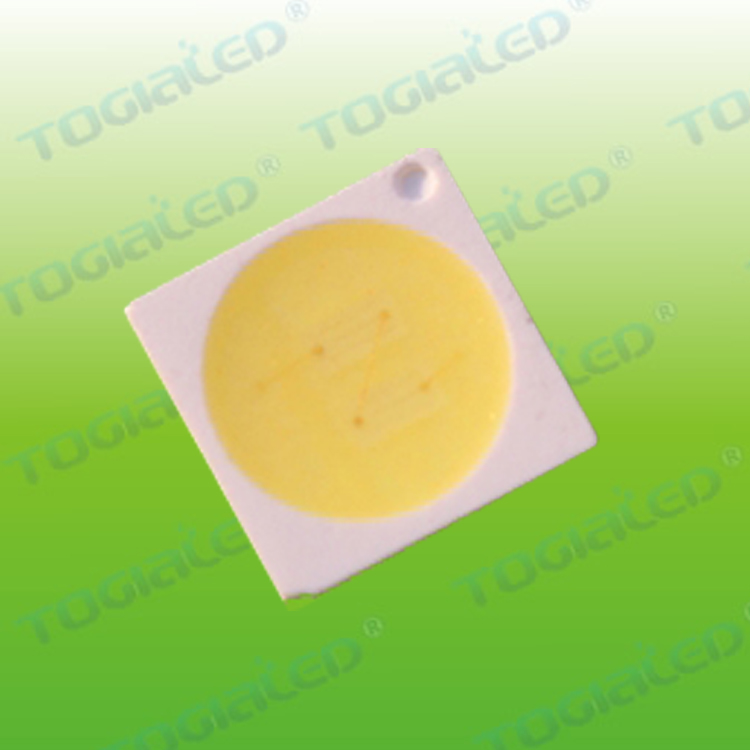
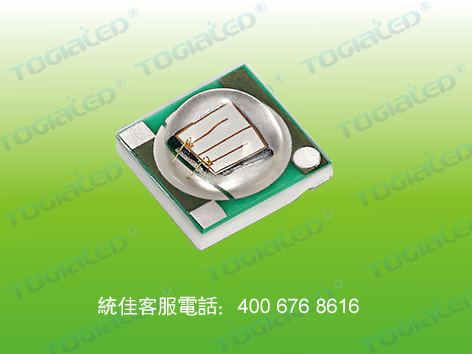
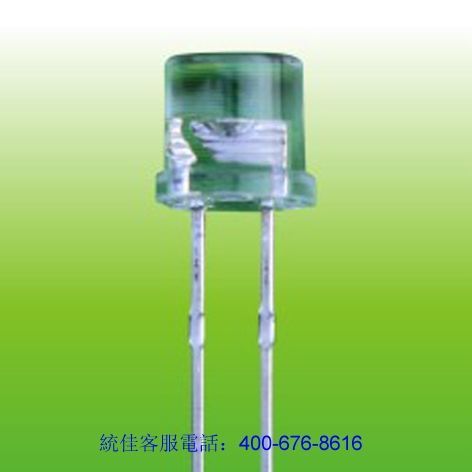
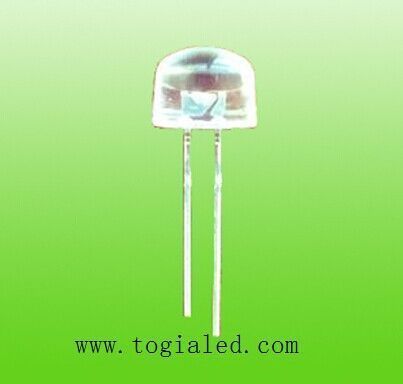
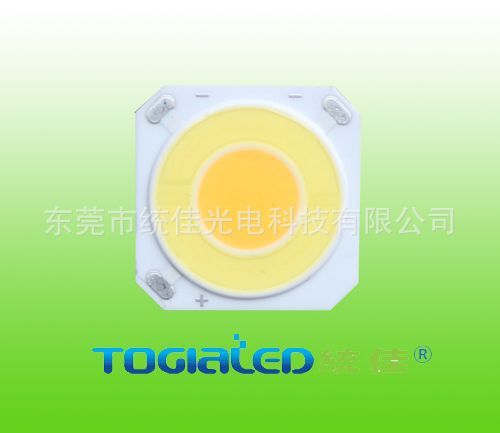
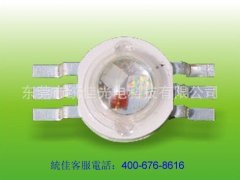
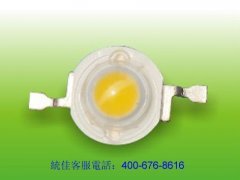
LED (light emitting diodes) are solid-state semiconductor devices that can convert electrical energy directly into light. The heart of a led is a semiconductor chip of which one side is attached on the top of an anvil that is the negate power lead, and the other side is connected with a whisker to a positive power lead. It is the most important part of the LED.and it is entirely encapsulated in an epoxy resin enclosure.

A semiconductor chip consists of two parts, one is called P-type semiconductor where holes dominate the region, and the other part is N-type semiconductor where is dominate by electrons. When they are sandwiched together, there is a PN junction in between. And when an electric current is applied to the chip through the lead, electrons are pushed across the junction into the P-region, there, electrons and holes meet and recombine, and then release energy in the form of photons of light. That is why LED can shine. And the wavelength of the light, therefore its color,depends on th materials forming the PN junction, which is,the materials used to make the LED chip.

Generally , LED chips are made from gallium-based crystals that contain one or more additional materials such as phosphor to produce a distinct color.

Features and Benefits of LED

The inherent features of LED decide it to be the best alternative to conventional light source, and provide a wide range of application.

Small size:
A LED is essentially a tiny chip ,about 4.5mm, encapsulated in an epoxy resin enclosure, so it can be extremely small and light.

Low Power Consumption:
Generally a LED is designed to operated at 2-3.6v,0.02-0.03A current, that mean, it needs no more than 0.1w to operate. LED T8 tube saves 50-55% electricity of fluorescent T8 tube, LED bulb save 80-85% consumption of incandescent bulb.

Long lifetime:
Operating at a desired rated voltage, current and environment, LEDS enjoys a long life of up to 100,000hours.

High luminous efficiency and low heat emitting :
Due to the special materials that used to make LEDs, during electrons transition, LEDs mainly emit electromagnetic energy in the visible parts of spectrum, unlike the incandescent filaments heated, which emit a lot of electromagnetic energy in the infrared pat of the spectrum which can’t be seen but is felt as heat. That is to say .LEDs are of high luminous efficiency and low heat emitting .The best LED in the market now emits 321m/w, which is almost twice as efficient as an equivalent tungsten-filament light bulb,and it is reported that LED emit 601m/w, which is as bright as 20w fluorescent lights has been found in the market.

Read the rest of this entry »

The application of LED

LED’s proprietary characteristics above mentioned determines their ideal suitability in a wide range of application.

Decorative lighting
Due to the rich variety in colors, small size, durability, energy savings, LEDs are perfect light source for decorative application. Attached on a PCB, flexible cable, or other desired materials; LEDs can be used for light source of channel letter, signs, border light, light tube and so on.

Illumination
With the advance of the white light LED technology, an array of white light LEDs assembled in a certain way are now bright enough to be used for domestic illumination, such as light, table lamp, and garden lamp etc.

Display
A typical application of LEDs is for message display or large-scale display screen, which are popularity used in sport fields, airports, business centers and so on. The largest LED display in the world is 36mm high, at Times Square,Manhattan.

LCD backlight
Because of LED’s small size and low power consumption, they are perfect light source for LCD backlight.

Read the rest of this entry »

Pages: 1 2 3 4 5 6 7 8 ...Next